HPC-AI Advisory Council UK 2026, day 1
Live notes
Live notes from the HPC-AI Advisory Council 8th Annual UK Conference, Mattioli Woods Welford Road Stadium, Leicester, 13–14 October 2026. Updated through the day; day 2 is here.
09:30 Introduction
Conference Introduction and Overview — Brian Sparks (HPCAIC), Mark Wilkinson (DiRAC)
Our conference theme for 2026 is “HPC-AI: From marketing to reality: What Works; What doesn’t; What’s Next?”
Interestingly, this image is generated by ChatGPT, which assures us the headlines are correct.
09:40 UK-LLM
UK-LLM and a Path Towards Frontier-level Open Source Artificial Intelligence — Pontus Stenetorp (University College London)
The most important innovation is language, so I’m not surprised intelligence comes from text.
Units of innovation:
- Pre-training: ~$100 million.
- Some interesting research questions can only be asked at this phase.
- No moat, only trade secrets.
- Fine-tuning.
Their first model was not much of an innovation but a demonstration, except for one thing: using its own generated text to fine-tune itself. They haven’t published this, and it has since become a standard part of training.
The curse of multilinguality: training on 2 languages is worse than training on 1. Cross entropy turns training into classification, and with more to classify, the model loses interest.
English superiority: models do better if prompted in English. The idea is then to translate text into English first and train on that. The problem is that translation has “translationese”, so the quality is lowered. It turns out that training purely on translated text performs almost as well. Their comparison of English vs. English+French shows they “solved” the curse of multilinguality.
Barriers of intelligence: e.g. 7B seems to be the barrier to “think” well.
The decision with students: all of you can be first authors of a paper, or have a ton of compute (UK-LLM, SOFAIR, …).
OSAI Working Group. The Open Source AI Definition:
- does not require you to release the training data, only to describe it;
- their aim is to release with ethical training data, stricter than OSAI requires;
- is not the same as open source software;
- comes in degrees of openness.
Why release the data?
- E.g. generalization: without the training source, you can’t tell how out of sample something is.
- E.g. the Hugging Face incident: why can’t we investigate what happened the way we treat a plane crash?
- E.g. Kimi K3 on local hardware: it would be even greater for a truly transparent model.
Isambard-AI as a full machine is 46 million GPUh/yr; a frontier LLM takes ~20–40 million GPUh.
Sovereign is not isolated, hence the Global Open Source AI Summit.
On the £750 million investment for inference only: we need investment for training as well, otherwise he can move and give up training in the UK.
Question from meeting him afterwards:
He mentioned that the UK government is not investing in LLMs correctly. So I followed up, saying it seems like in the last few years AI research has only been possible in private companies, and the natural question to ask is why not found one. His answer primarily lies in the key criterion he wants to have: open training data. A private company will not allow that, because in reality if you have money and people see that in the training data, companies will sue (he quoted the copyright article on Wikipedia mentioning Mickey Mouse), and hence the only way to do it is to have no money worth suing for. The Global Open Source AI Summit he mentioned has even thought of setting up two companies, one in the most liberal country, while the other holds the money, compute, etc., and basically prepared to get sued.
10:35 Isambard-AI
Isambard-AI’s Early Years and Future Roadmap: Driving Open and Sovereign Supercomputing — Sadaf Alam, Richard Gilham, Ashish Tom, Jake Watson (Bristol Centre for Supercomputing (BriCS), University of Bristol)
- 5,448 GH200
- ~5,000 users
- AIRR Portal, built on Waldur
- Kubernetes on Slingshot: vLLM containers work at near bare-metal performance
Rise of the agents:
AI Agents could turn all users into superusers, but only if they do…
There should have been a pun intended here: superusers? Agents on the loose?
Agentic Ops: https://skills.isambard.ac.uk. What is this? It redirected to docs.isambard.ac.uk for me.
Low volume of support tickets: ~100–120 tickets per month.
Catching up with Rich afterwards:
- There are many signs users are running coding agents.
- They are getting things done, but causing so many problems: running on login nodes, etc.
- Compared to before coding agents: different, not better or worse.
11:15 Coffee
11:40 BeeGFS
BeeGFS High-Performance Storage Software, Sovereign by Design — Dominic McKendry (BeeGFS)
BeeOND: BeeGFS On Demand.
A case study: a university in Germany thought they could buy 1.5 PB of NVMe storage, which is not possible anymore. Instead: 300 TB of SSDs + old HDDs.
S3 objects.
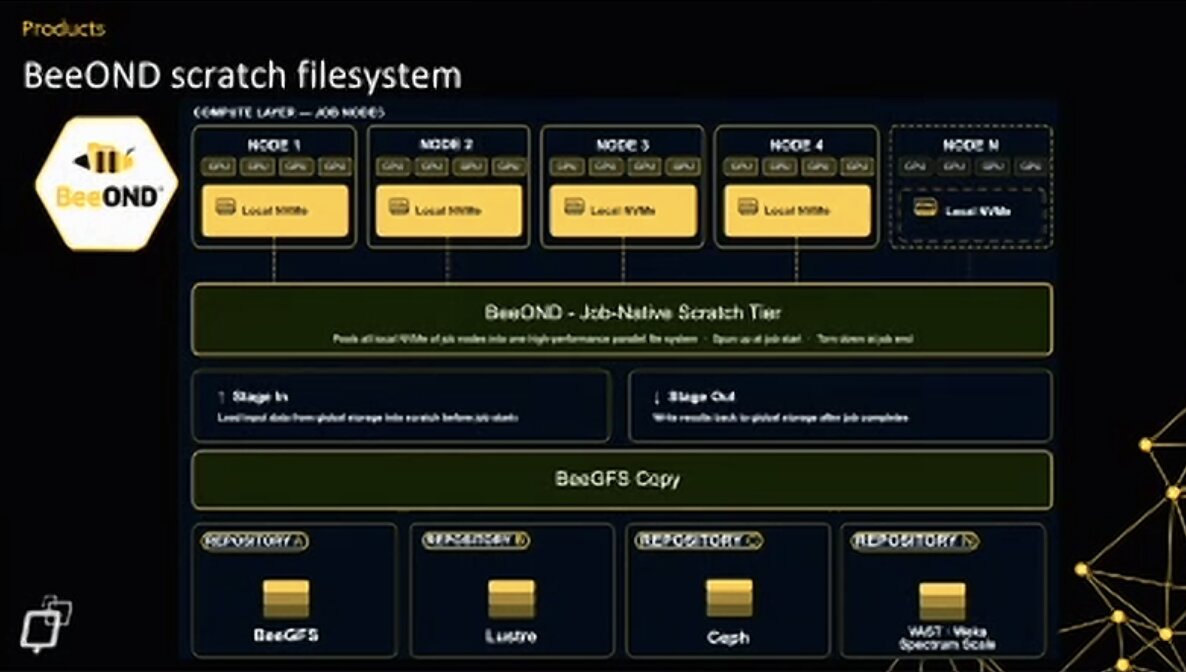
- In userspace
- Deployed in minutes
- Software-defined
12:00 Data-driven force fields
Data-Driven Force Field Development for Biomolecular Simulation — Daniel Cole (Newcastle University)
Biomolecular systems are heterogeneous, span wide spatial and time scales, and are sensitive to small differences in energy.
Molecular mechanics:
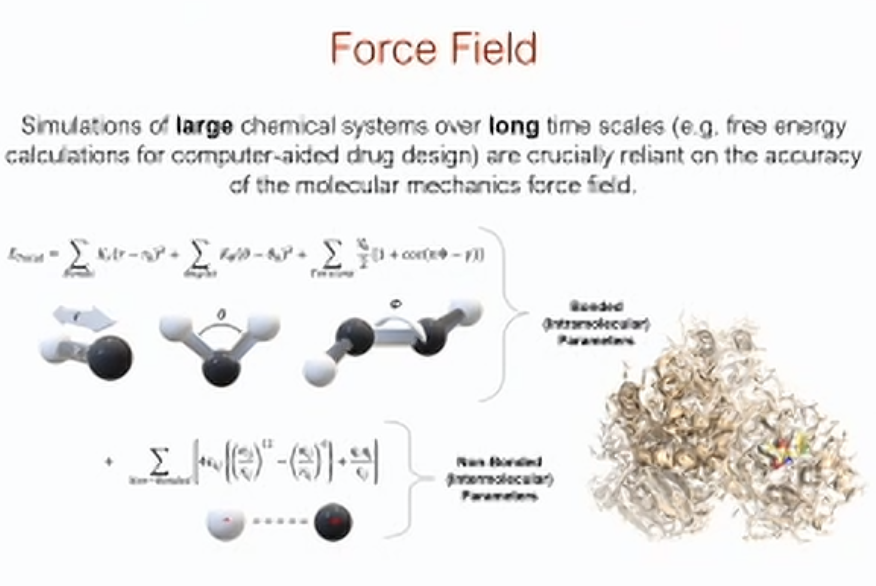
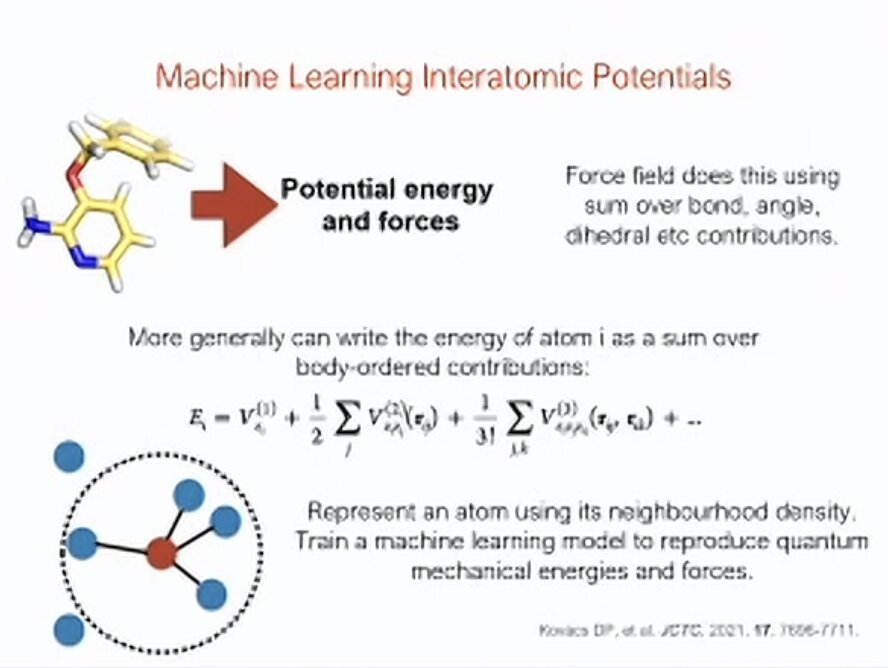
His blog and group on GitHub.
12:30 The venture scientist
The Venture Scientist and the Compute Layer: What HPC-AI Unlocks for Science Founders — Riam Kanso (ConceptionX)
- Not every PhD will end up in an academic position.
- The funding model: in the future, some of these successful companies can fund the next generations.
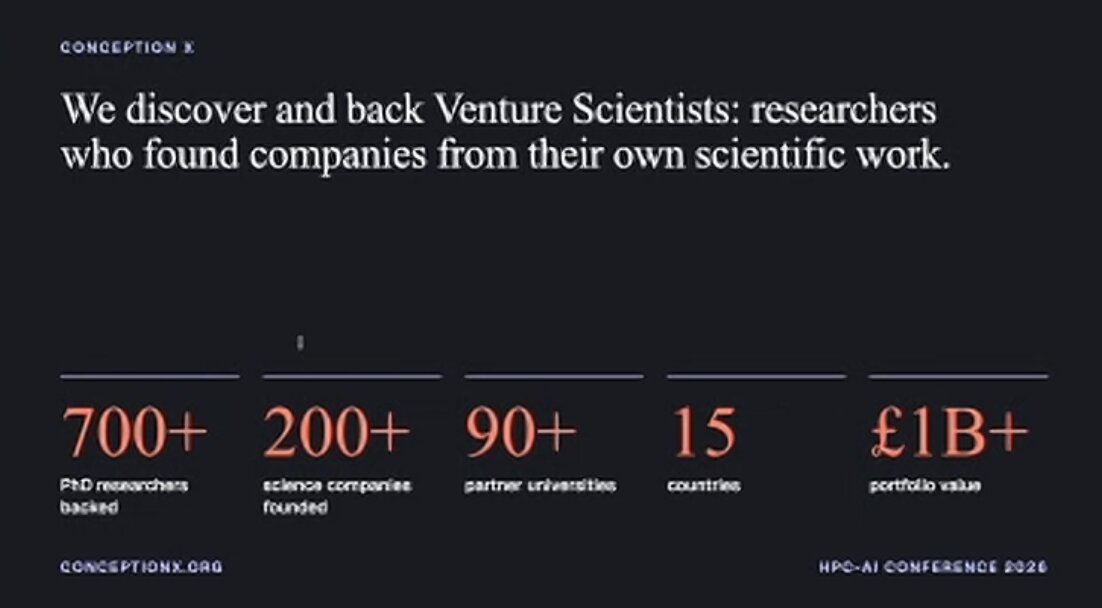
There is no obligation to found a company; it could be two chapters in the dissertation.
- This changes what % of people would consider founding a company.
- Compute is important for founding scientists:
- validation speed
- what can be built
- who can build it
Case studies:
- QMatter
- Mater-AI: 7 out of 9 AI-generated materials successfully replicated in the lab
What do they have in common?
- Insight first
- Proof is the currency
- Small teams, big science
It is between a few of them going through to a professorship, or most of them working for large corporations.
Researchers lose compute when they need it most
They provide training like a “Deep tech MBA”.
I asked whether she worries these newly founded companies might be acqui-hired by big companies, and whether that would impair her vision.
She said no, the value is in the creation of these companies, even if the founders eventually still end up working for big companies. It is still better than getting there directly and working there for the rest of their lives.
13:00 Lunch
14:00 Credibility of quantum computers
Credibility of Real-World Quantum Computers and Simulators — Animesh Datta (Warwick University)
Mission 1
By 2035, there will be accessible, UK-based quantum computers capable of running 1 trillion operations and supporting applications that provide benefits well in excess of classical supercomputers across key sectors of the economy.
From the UK’s National Quantum Strategy Missions.
- Quantum 1.0: single-particle quantum mechanics
- Quantum 2.0: many-particle quantum mechanics
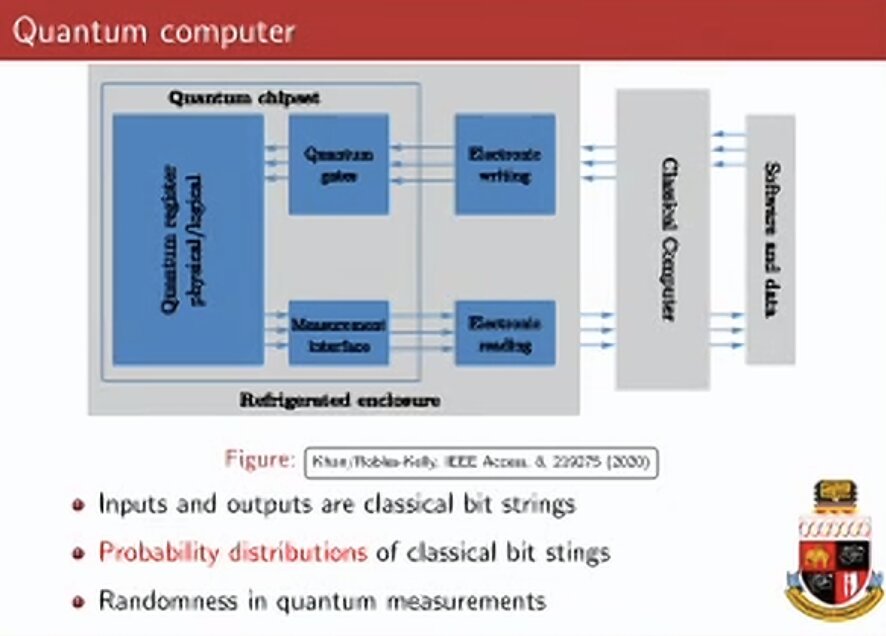
He pointed to Quantum Algorithms (Dalzell et al., Cambridge University Press, 2025).
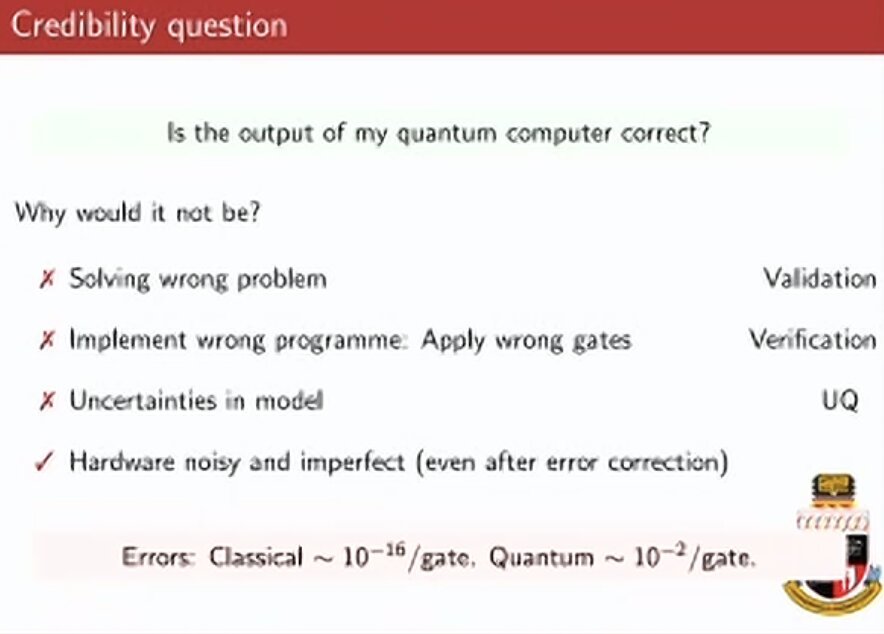
Integer factoring can be verified easily. But not all problems are like this, e.g. differential equations, optimization, etc.
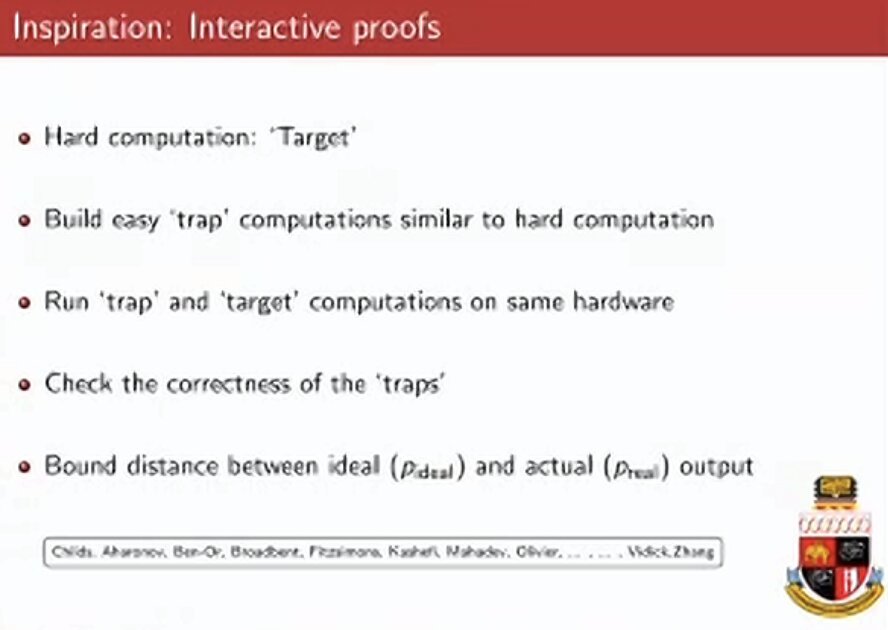
Interactive proofs: establish traps to bound the target.
14:40 The HPC Hardware Lab
The HPC Hardware Lab — Alastair Basden (DiRAC / Durham University)
Interesting to see: SSH by day, Slurm by night.
They mentioned SHAREing here, a UKRI Digital Research Infrastructure project that provides performance and machine assessments to the UK computational science community.
15:00 NFCS roadmap
Connect, Coordinate, Collaborate - The NFCS Roadmap for Federation — Jon Hays (Queen Mary University of London)
National Federated Compute Services.
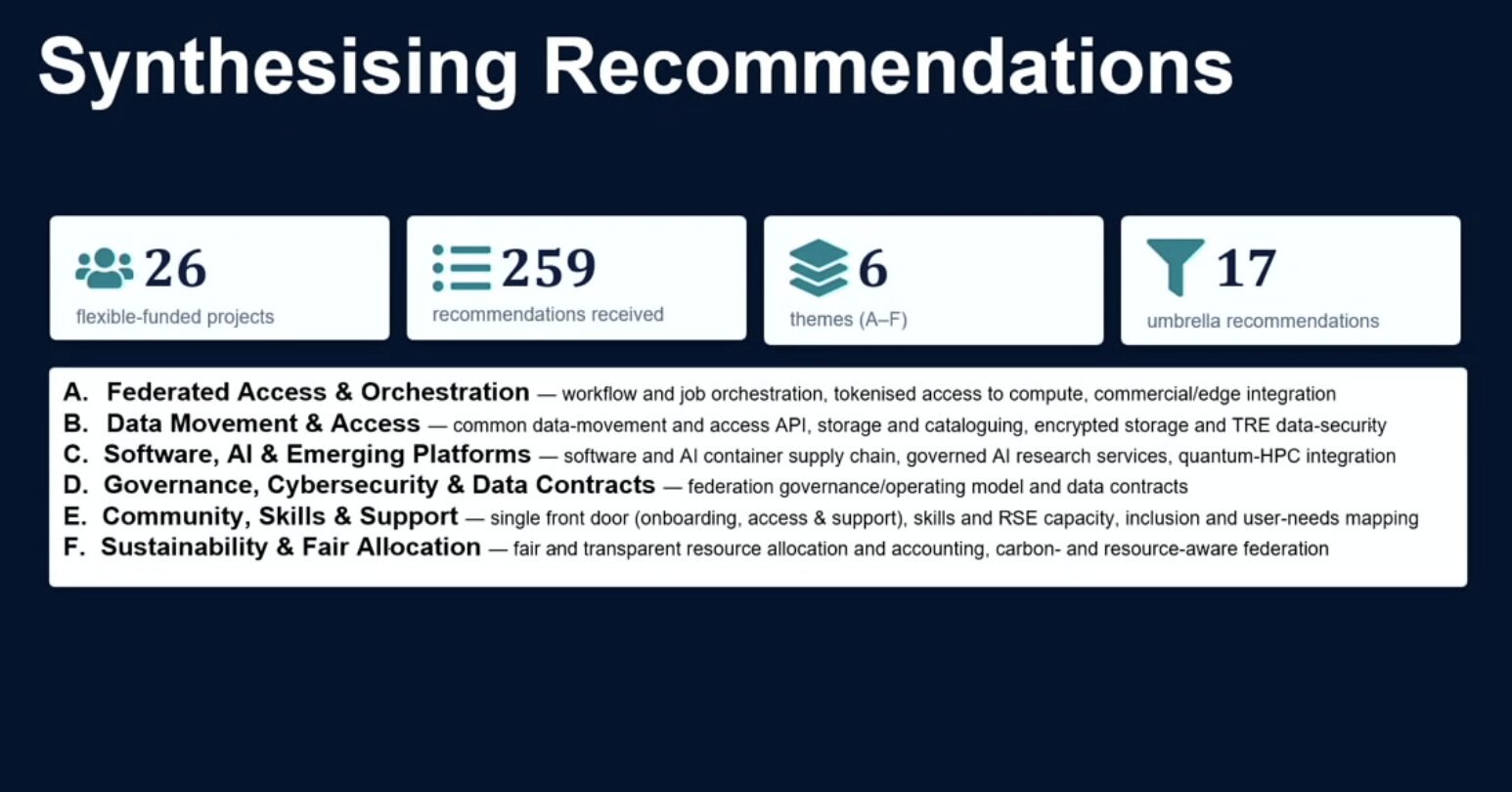
- Programmatic access by AI
- access to resources, data, tools
15:20 DRI ecosystems
Evolving Digital Research Infrastructure Ecosystems: A Metascience Perspective — Louise Chisholm (UK SKA Regional Centre / UCL)
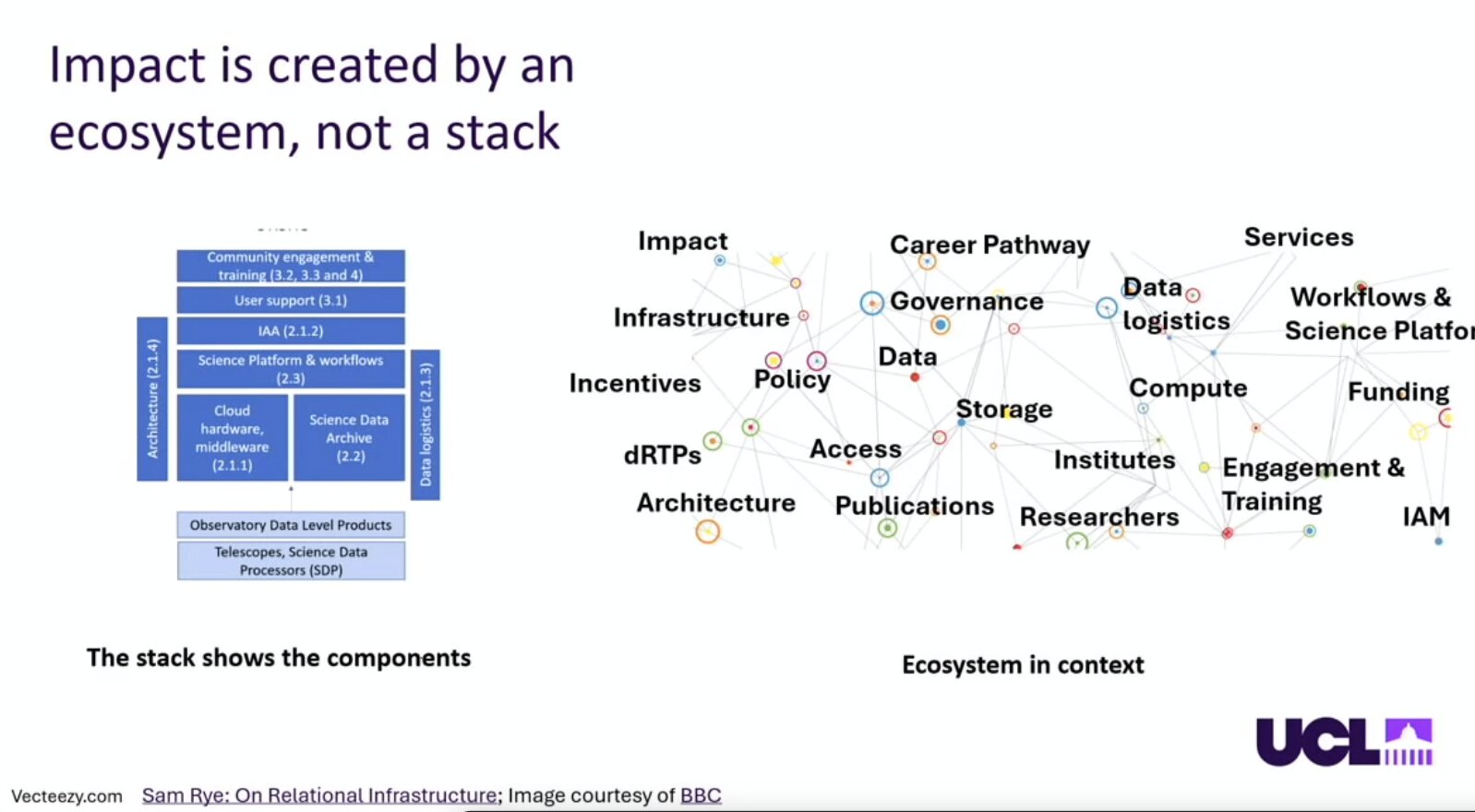
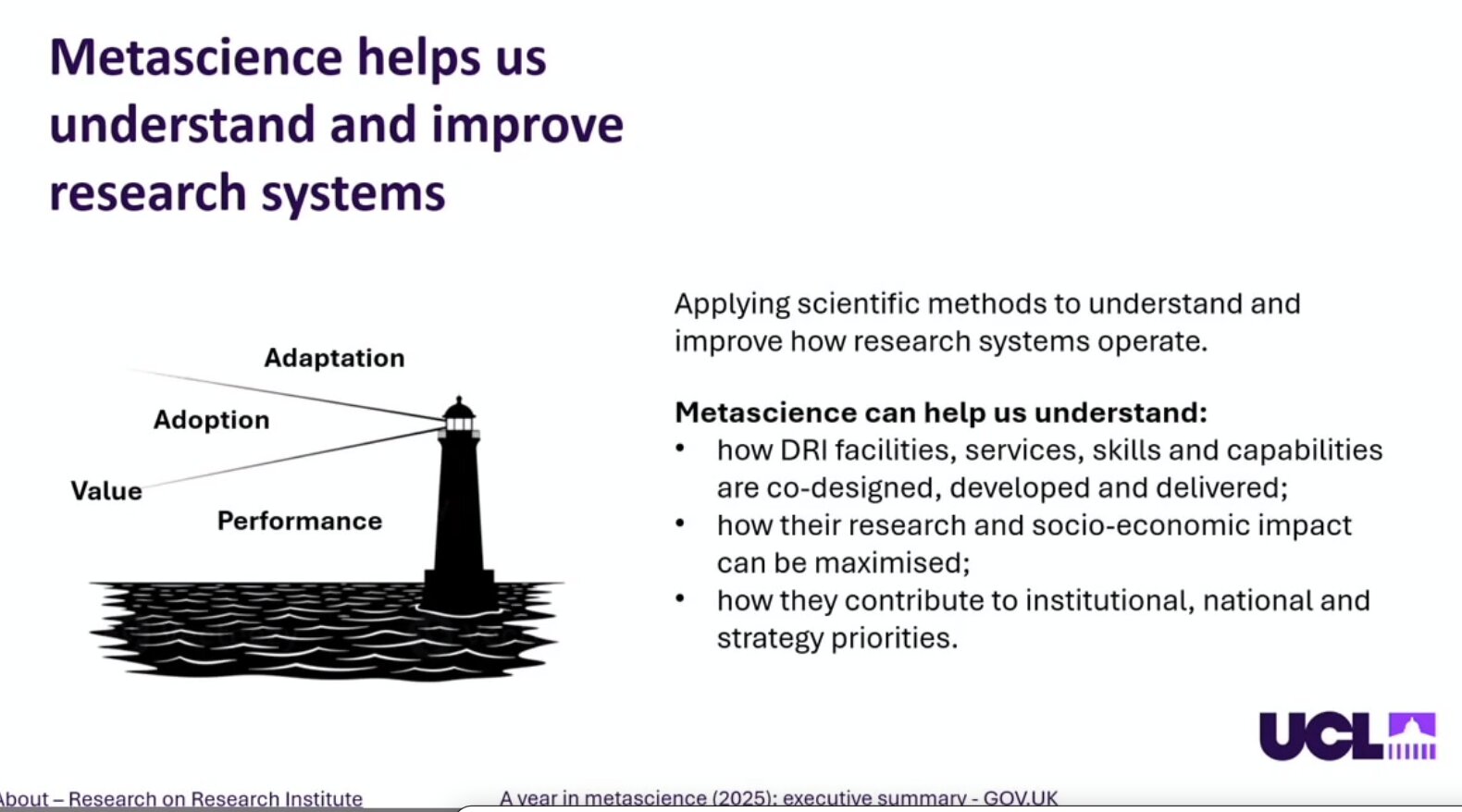
Related to, but not the same as, Thomas Kuhn’s idea.
15:40 AI predictive maintenance
AI-Driven Predictive Maintenance and Foundation Models for Sustainable and Cost-efficient HPC Systems — Erick Sperandio Nascimento (University of Surrey)
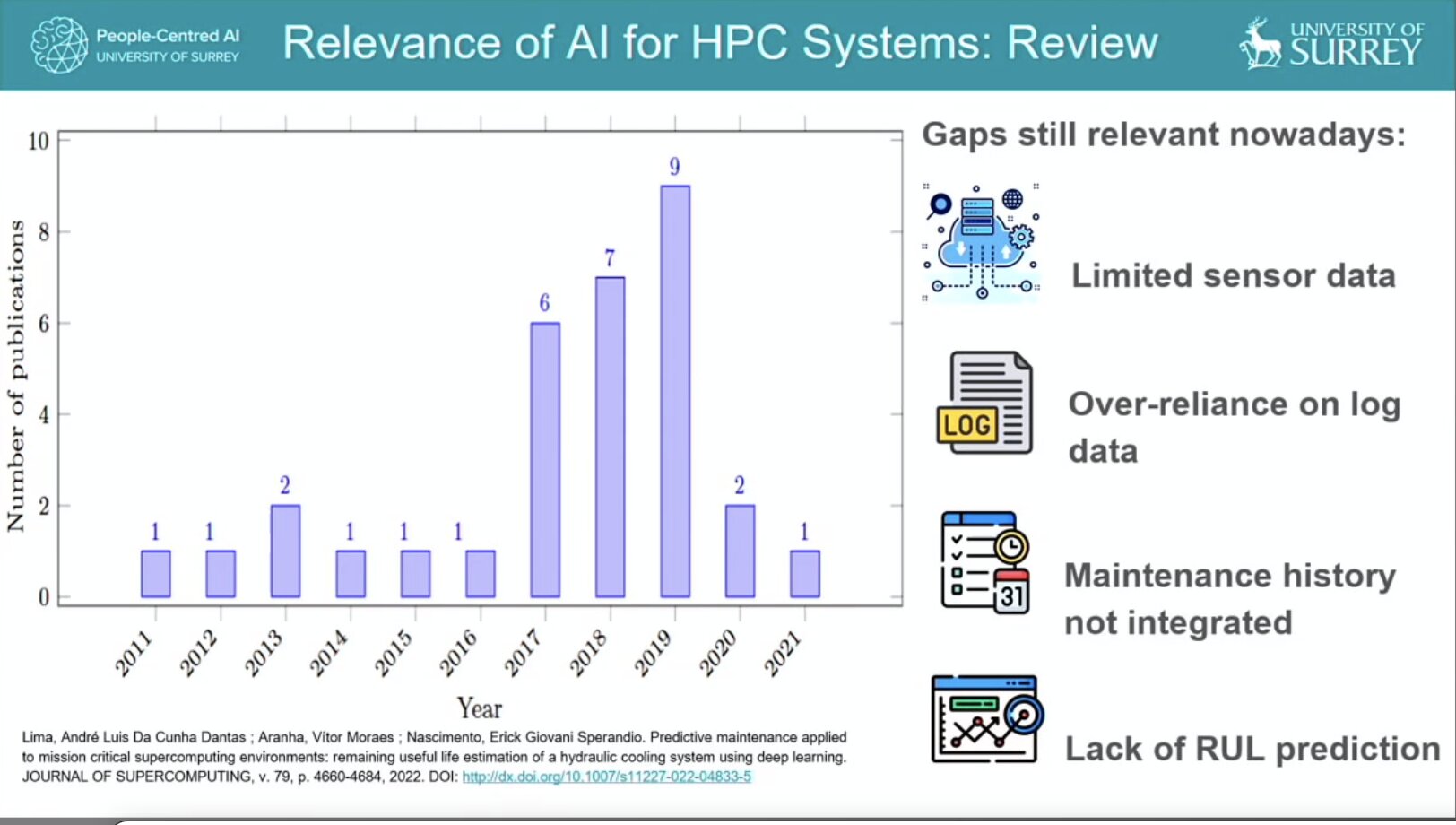
Downtime cost: ~$9k/min.
16:00 Coffee
16:25 Integrated HPC+AI systems
Towards an Accelerated Tomorrow – Planning for Integrated HPC+AI Systems of The Future — Chris Derson (Fsas Technologies)
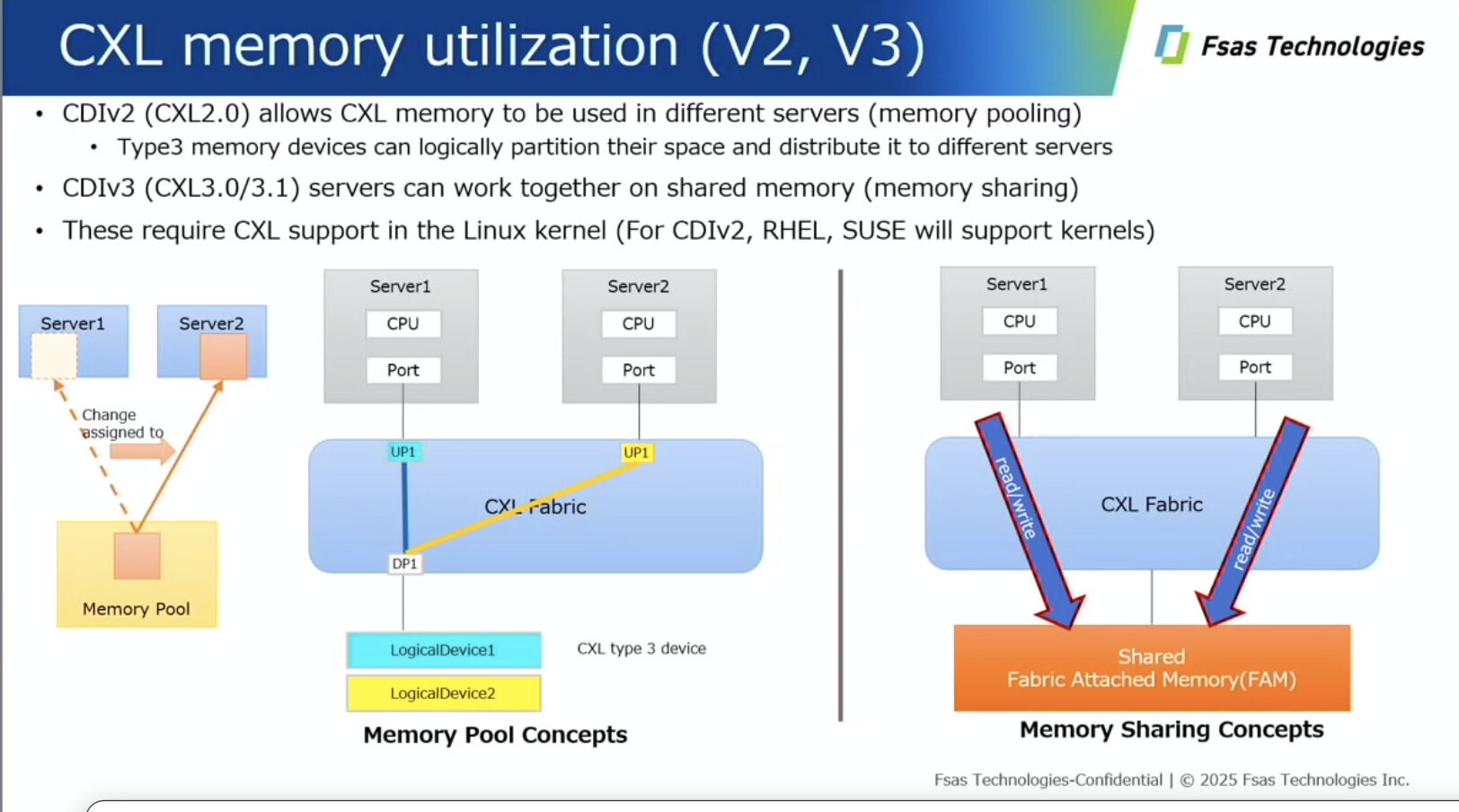
What’s CXL? Digesting it with a ChatGPT session: like a network-attached memory pool that eliminates as many middlemen as possible:
something between NUMA and RDMA: a memory fabric that enables load/store access across a larger physical system, without automatically providing the global addressing and coherence semantics of a single SMP machine.
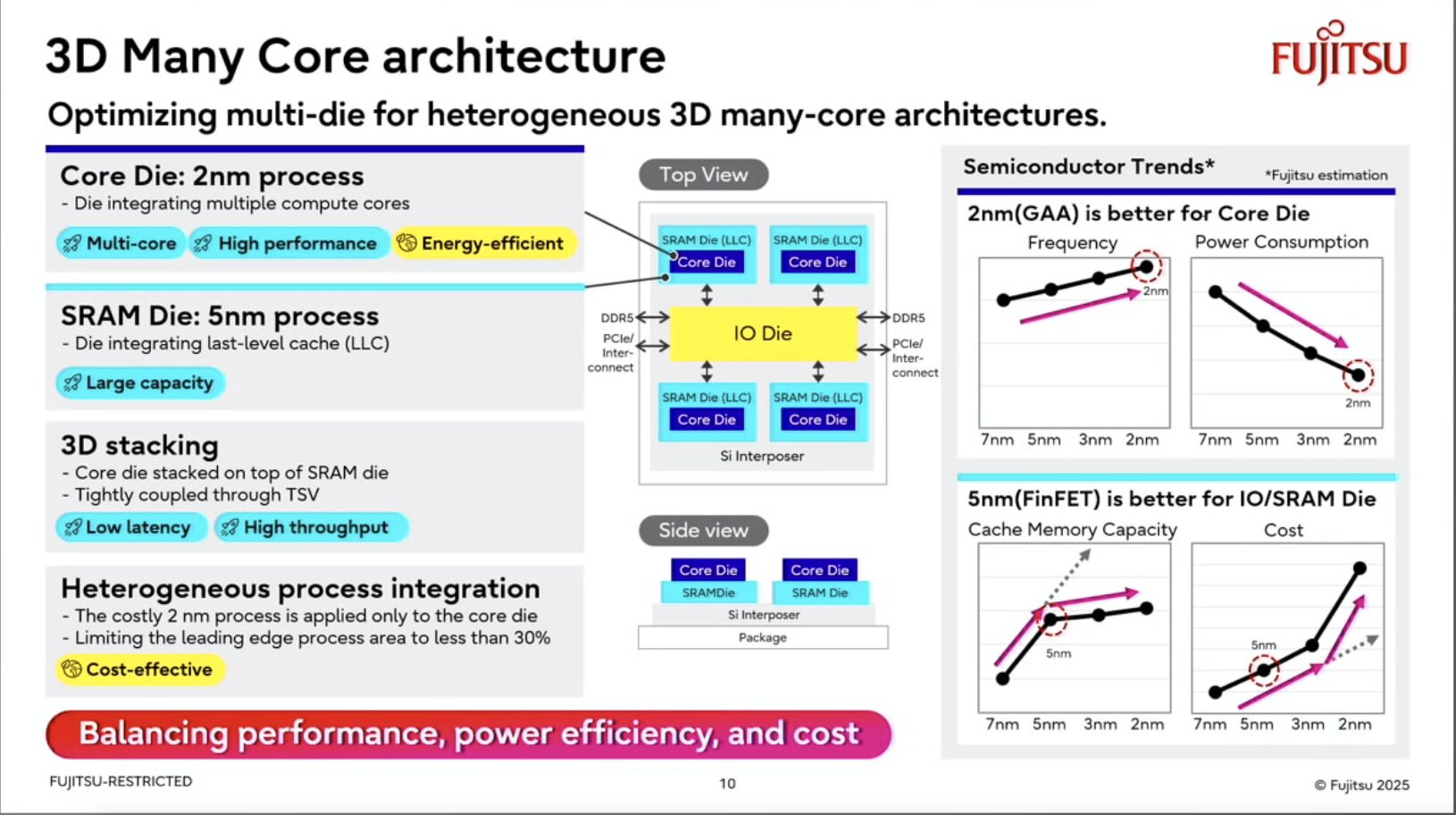
ChatGPT digestion:
Fujitsu’s 3D many-core architecture is most comparable to AMD’s second-generation 3D V-Cache, while its broader chiplet integration strategy resembles AMD’s MI300 and TSMC’s SoIC + CoWoS technologies. Designed for the FUJITSU-MONAKA Arm processor, on sale from November 2026, the architecture stacks 2nm compute dies on 5nm SRAM dies and integrates multiple chiplets through a silicon interposer. Rather than introducing fundamentally new packaging technology, Fujitsu differentiates itself by combining established 3D stacking and heterogeneous integration techniques to optimize CPU performance, power efficiency, and manufacturing cost.
They mentioned patched llama.cpp, vLLM, etc. running faster on Arm.
Is this related to the Arm HPC system in Japan by Fujitsu that once held the top spot in the TOP500 for a while? Yes: that is Fugaku, built on Fujitsu’s A64FX, #1 on the TOP500 from June 2020 to November 2021. MONAKA is its successor line, and a variant of it, MONAKA-X, is planned for FugakuNEXT.
16:45 Panel: AI, simulation & discovery
Panel: AI, Simulation & the Future of Scientific Discovery
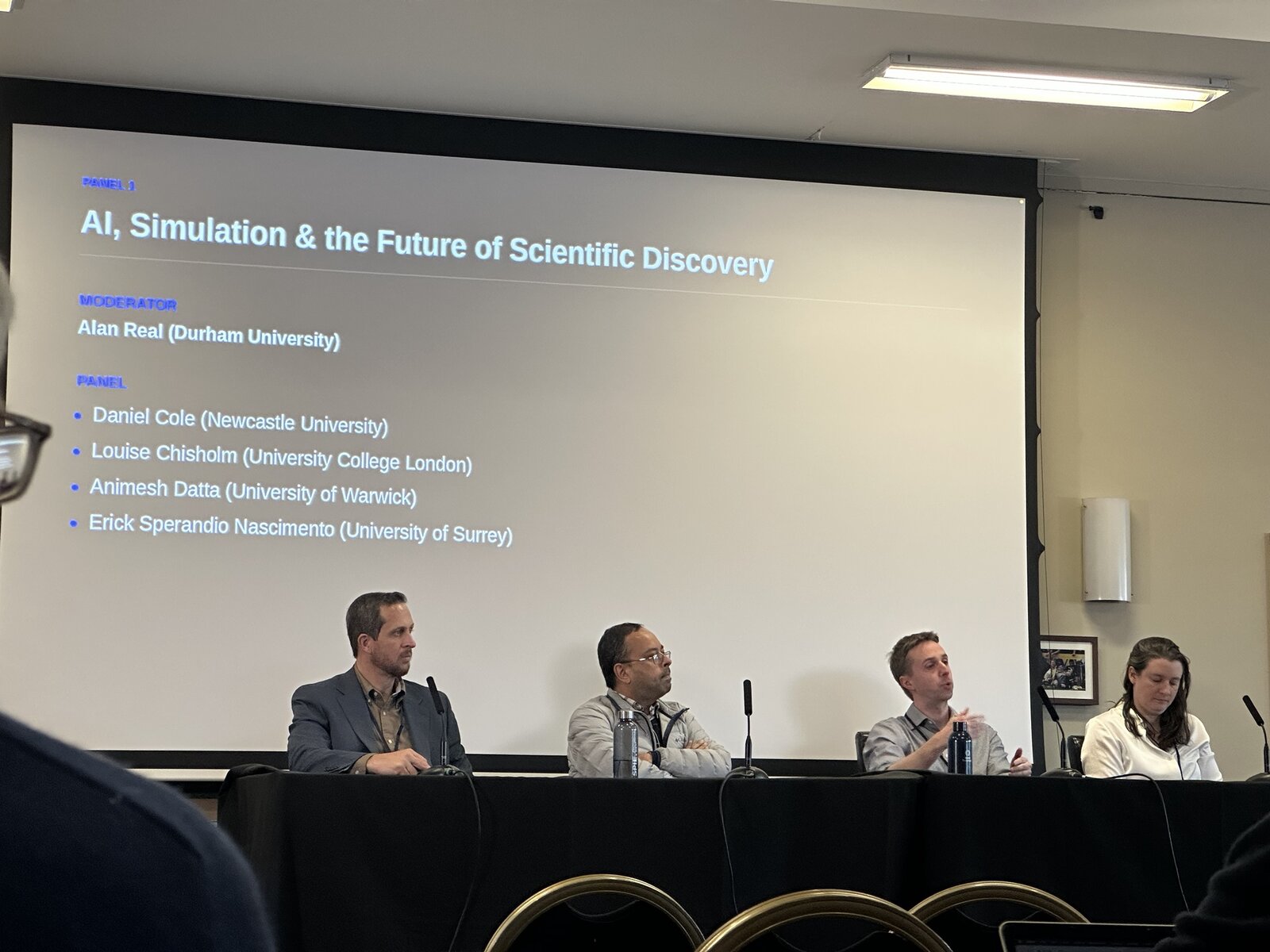
- Alan Real (moderator) — Director of Advanced Research Computing at Durham University, Technical Director of the N8 Centre for Computationally Intensive Research, and Director of the Bede Tier-2 service.
- Daniel Cole — Reader in Computational Medicinal Chemistry and UKRI Future Leaders Fellow, Newcastle University. His talk at 12:00.
- Louise Chisholm — oversees the PRISM pathway in UCL Advanced Research Computing, and Joint Director of the UK SKA Regional Centre. Her talk at 15:20.
- Animesh Datta — Professor of Theoretical Physics and Co-Director of Warwick Quantum, University of Warwick, where he leads the Quantum Information Science group. His talk at 14:00.
- Erick Sperandio Nascimento — Associate Professor (Reader) in AI for Clean Air Systems at the Surrey Institute for People-Centred AI, and Programme Lead of AI and Sustainability, University of Surrey. His talk at 15:40.
17:15 Day 1 endnote
Day 1 Endnote: TBD — David Barber (SOFAIR)
Science of Fundamental AI: A UK AI Research Lab.
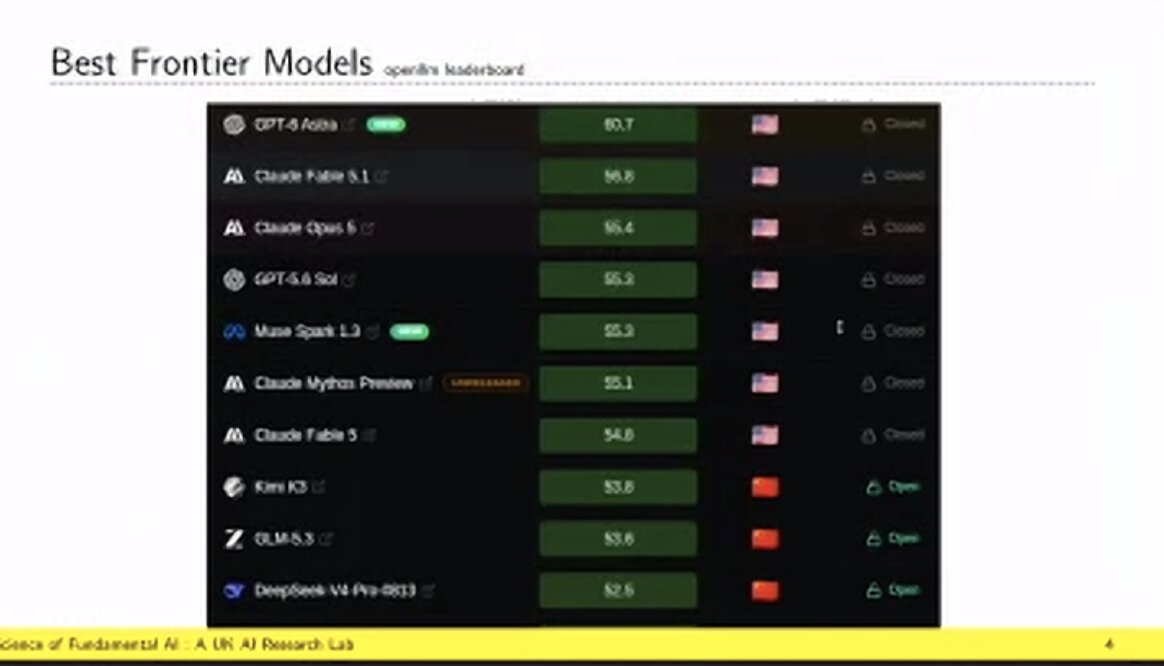
- Best models: closed, US.
- Next best: open, PRC.
Reliable Access to Reliable Models.
All frontier open models are MoE now.
AI for Science? → Science for AI: bring different sciences to the table to build better AI.
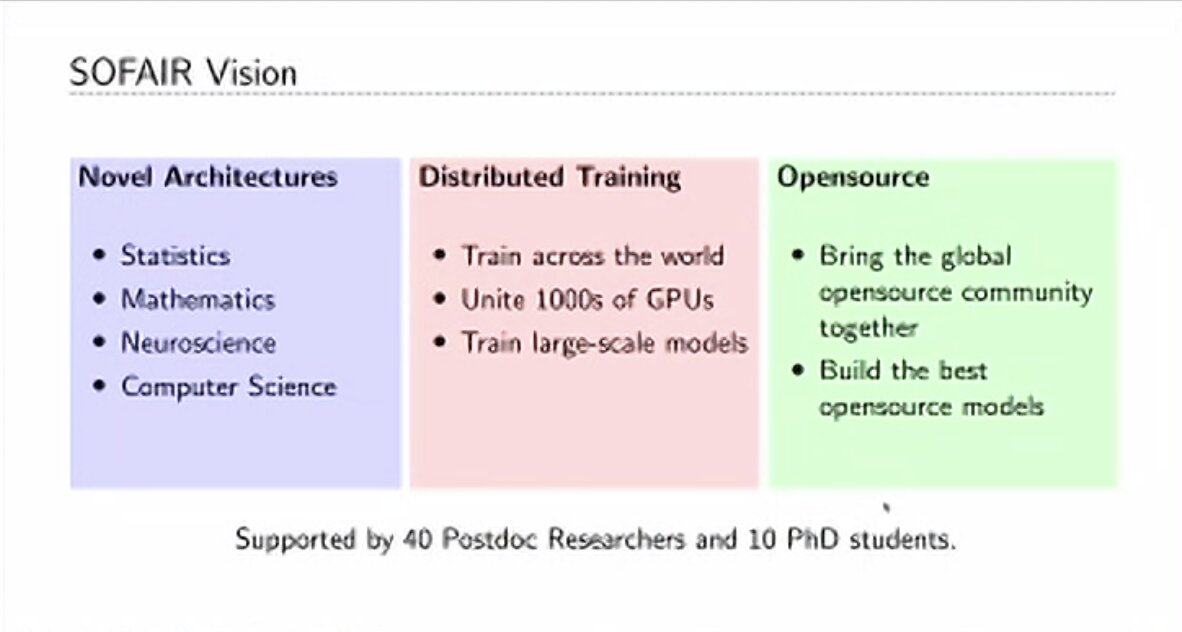
The idea: decentralised training.
UK AI Grid:
- Zenith
- Dawn
- Isambard
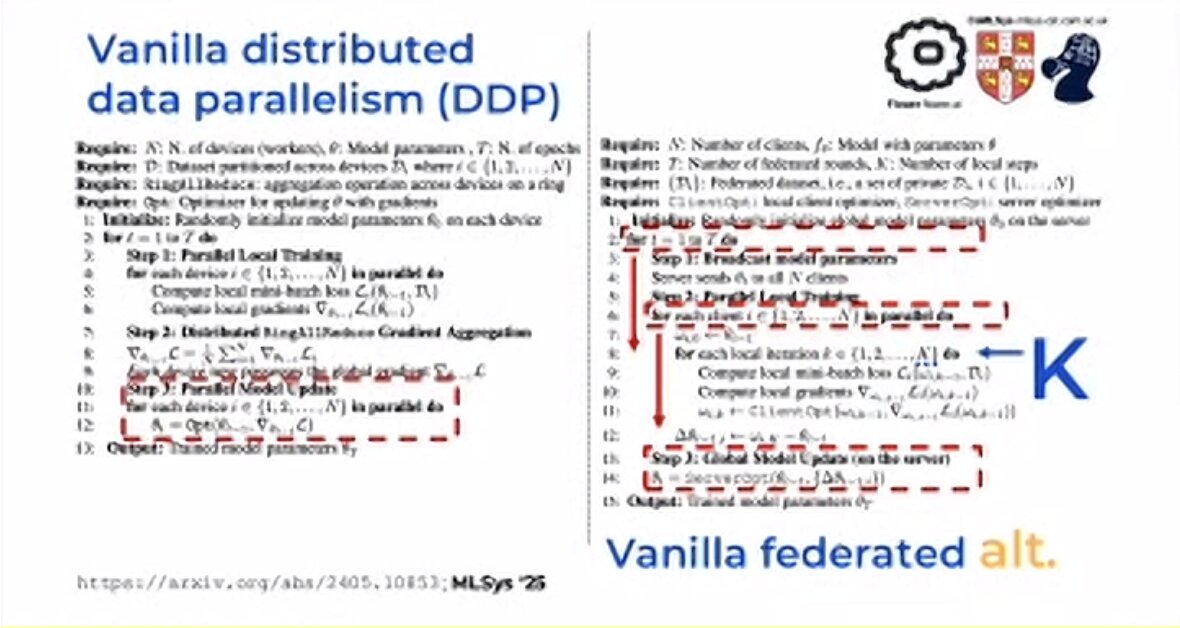
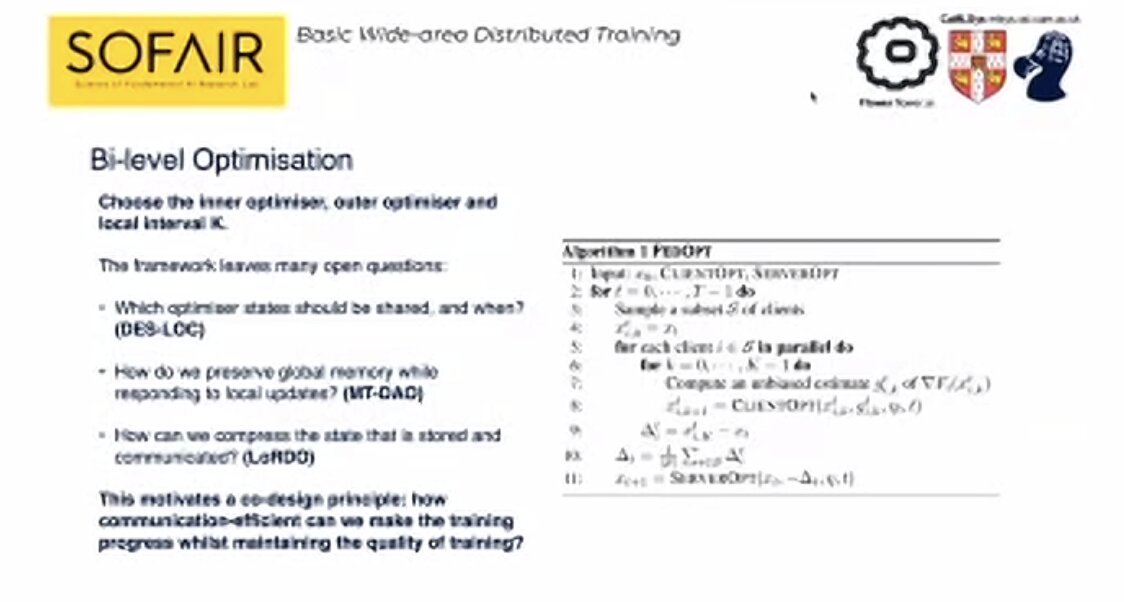
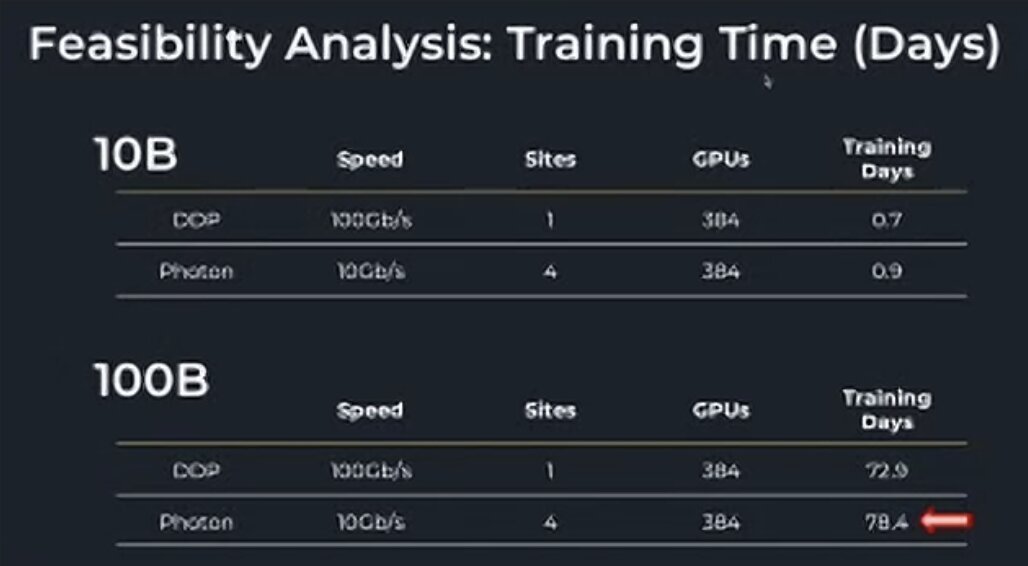
So training across sites doesn’t increase the wallclock time much.
Faster attention:
- Flash attention is solving the issue via hardware.
- Sparse attention: cf. “A survey of transformers”. The “needle in a haystack” isn’t addressed by these kinds of approaches.
- Bidirectional…
- Hidden layer: lower rank?
- Recurrent encoding: sort of like a Kalman filter.
- Mamba is one row in the table comparing the alternatives.
We have plenty of ideas (for faster attention), but the main difficulty may be demonstrating them at scale.
Audience Q: the French have a SOTA model, why don’t we?
A: The French are more protectionist than the UK.
It seems like people in the UK government are negative and say “we can’t do it”, but the speaker thinks we actually can.
SSMs like Mamba scale like O(K^2).
18:00 Close
Day 1 Close - Day 2 Look Ahead — Brian Sparks (HPCAIC), Mark Wilkinson (DiRAC)